Dog Socialization & Park Training · Los Angeles
Dog Socialization & Park Training in Los Angeles
Private sessions in LA parks and on busy sidewalks for dogs who need calm social skills, not a crowded class.
- In-Home & Private
- BBB A+ Accredited
- Training Since 2011
Ask About Dog Socialization & Park Training
Tell Raquel about your dog and what is going wrong. She will call you back to talk it through.
Your details stay private. Prefer to talk now? (323) 629-3767
Dog Socialization & Park Training
Dog Socialization Training in Los Angeles, One Dog at a Time
Your dog freezes at the park gate, barks at every passing stroller or hides behind your legs on a crowded sidewalk. Or it plays so hard that other owners call their dogs away. With Raquel, dog socialization training in Los Angeles helps your dog relax in the places you actually go: parks, sidewalks, trailheads and the patio at your favorite coffee shop.
Raquel has worked with LA dogs since 2011, always one-on-one. This branch of dog training in Los Angeles happens out in the neighborhoods where your dog lives, at a pace your dog sets.
Socialization means helping a dog stay comfortable and polite around new people, dogs, sounds and places.
What Good Socialization Really Looks Like
A well-socialized dog is not the one that greets every dog in the park. It is the dog that notices a toddler, a jogger or a yappy terrier, glances back at you and carries on. Calm, neutral behavior is the real goal, and friendly play is a bonus for dogs who enjoy it.
Common signs a dog needs help, followed by the everyday habits Raquel works toward:
- Freezing or hiding when people approach
- Rushing up to every dog it sees
- Missing other dogs' warning signals
- Panic in crowds or around loud noise
- Refusing to walk down certain streets
- Loose, relaxed body in new places
- Short, polite greetings, or none at all
- Checking in with you when unsure
- Settling under a patio table or park bench
- Bouncing back quickly after a surprise
Lunging and barking at dogs on the leash needs its own plan first, through leash reactive dog training.
Private Park Sessions Instead of Crowded Classes
Many owners start by searching for socialization classes for dogs near me or puppy socialization classes. Group classes put several excited dogs in one space, which can overwhelm a shy dog and teach a bold one to charge in. Raquel trains privately instead, so each new experience is planned around your dog.
Neutral Locations, Controlled Exposure
Follow-up sessions happen on neutral ground: a quiet corner of a neighborhood park, a sidewalk with steady foot traffic, or a spot just outside a dog park fence. Your dog has no territory to guard there. Raquel chooses the setting and the distance, then adjusts as your dog relaxes.
Dog Training in the Park: Los Angeles Settings That Build Confidence
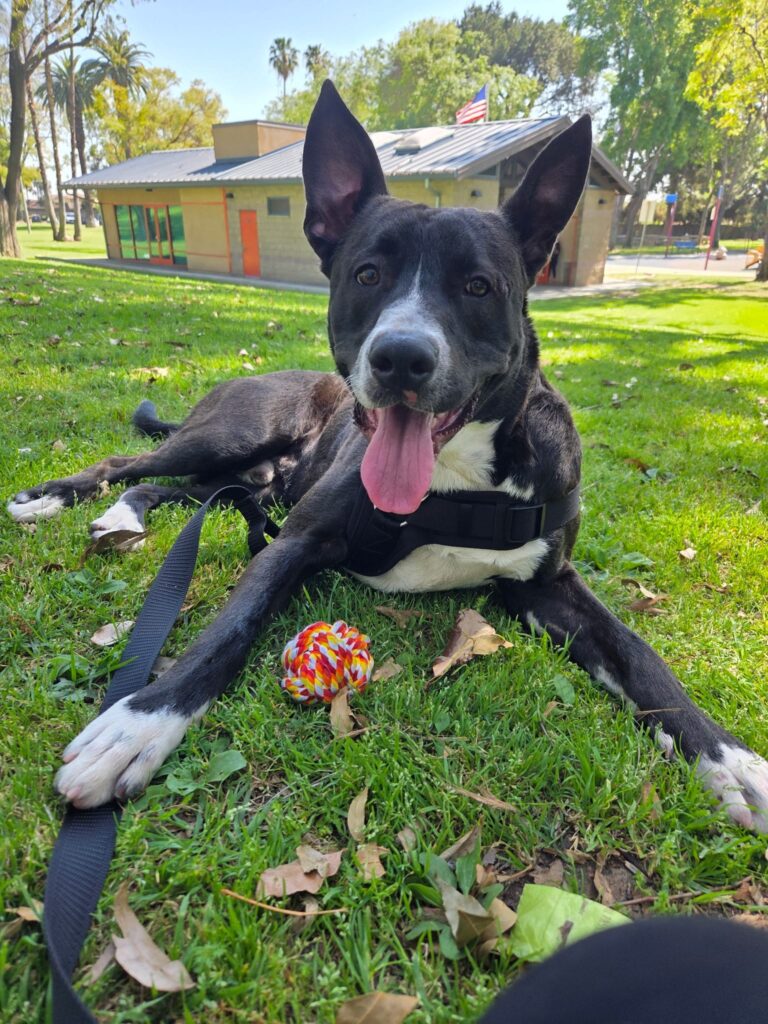
LA gives a dog plenty to take in: joggers on park paths, kids at soccer practice, picnic blankets and outdoor tables packed close together. Park sessions run 1 to 2 hours, long enough to see how your dog copes with real distractions while you hold the leash.
How Raquel Builds Social Confidence
Raquel starts at home and works outward. She watches how your dog behaves where it feels safest, teaches you to read its signals, then carries that plan into parks and busy streets. You learn to guide your dog in public yourself, so progress keeps going between sessions.
- One-Day In-Home Master Class: a 3 to 5 hour visit at home, where Raquel learns your dog’s signals and coaches each person who holds the leash.
- Park and neighborhood sessions: 1 to 2 hours each, adding people, dogs and noise at a level your dog can manage.
- Free advice afterward: call Raquel for as long as you need, for the week a surprise encounter throws you off.
- The Way of Dogs: reading what your dog is saying, keeping structure and changing the human habits behind the problem.
A dog that is calm with one person and frantic with another is not finished yet, so Raquel trains the whole household. The plan itself takes shape during private in-home dog training
Questions About Dog Socialization & Park Training?
Talk it through with Raquel before you book.
Places Raquel Helps Dogs Feel at Ease
- Neighborhood Parks
- Dog Park Gates
- Crowded Sidewalks
- Cafe Patios
- Trailheads
- Guests at Home
Play or Trouble? Reading Dog Body Language at the Park
Healthy dog play looks loose, bouncy and a little silly, with both dogs taking turns. Trouble looks stiff, fast and one-sided. Spotting the difference lets you step in early, before one rough moment teaches your dog that other dogs are scary. Raquel teaches you to read these signals live, in real parks.
| What you see | Healthy play | Time to step in |
|---|---|---|
| Body | Loose, bouncy, exaggerated moves | Stiff posture, raised hackles |
| Face | Big, open-mouthed "grin" | Ears pinned flat, curled lips |
| Sounds | Over-the-top, playful growling | Low growls with a closed mouth |
| Chasing | Dogs take turns chasing and getting caught | One dog chases while the other tries to get away |
| Afterward | Both dogs come back for more | One dog leaves and does not return |
Play signals as described by the American Kennel Club.
During a session, Raquel points out these signals as they happen and shows you when to give your dog a break or head home. Play at a busy dog park can change in seconds.
Dog Park Training and LA Dog Park Rules
Dog park training prepares your dog to walk through the gate calmly, play politely and leave when asked. Not every dog needs a dog park, and some never enjoy one. For dogs that do, Raquel builds the skills first, often just outside the fence.
City dog parks have rules of their own. According to LA Recreation and Parks, dogs older than four months must be fully vaccinated and licensed, younger puppies are not allowed, and dogs can never be left unattended. The city’s list includes Laurel Canyon, Sepulveda Basin, Silver Lake, Westminster in Venice and Whitnall in North Hollywood.
Dr. Melissa Bain of UC Davis told the AVMA Convention that dog parks are not where dogs learn to socialize: “This is not puppy kindergarten” (JAVMA News, 2006). So Raquel saves the dog park for later, and can then help you build toward off-leash dog training if reliable freedom is your goal.
Help for Puppies, Rescues and Shy Adult Dogs
Socialization training suits dogs of any age. Puppies need gentle, varied first experiences, rescues often arrive with gaps nobody can explain, and some adult dogs were simply never taken out much. Raquel shapes each plan around your dog’s history and temperament. If fear around people or dogs appears suddenly, she suggests a vet check first, because pain can make any dog defensive.
Young dogs get socialization folded into puppy training, built around Puppy Packages for pups under 6 months. Recently adopted dogs often start with rescue dog training, which puts trust ahead of busy outings.
Searching for a shy dog class in Los Angeles? A private plan is often kinder: your dog warms up to one new person at a time, with no barking classmates.
The Trainer Behind Every Park Session
Good dog socialization training takes patience, sharp eyes and the same trainer every time. Her feel for dogs started on a remote Australian farm, growing up alongside German Shepherds, and she brings an AKC training background to every session. Happy Paws has been BBB accredited since 2016 (A+), and Raquel keeps a 4.9 average from Google and Yelp reviewers. There are no treats as bribes and no punishment, and her work comes with a 100 percent guarantee (ask for details).
There is no handoff to another trainer, from the first phone call to the last park session. Meet Raquel or see the full list of Happy Paws services.
More ways Raquel helps
Related Dog Training Services
Most dogs need a mix of skills. Raquel builds one plan around your dog, so these often fit together with dog socialization & park training.

Biting, potty routines and first cues for puppies, taught at home from day one.
For dogs who bark and lunge at dogs, bikes, scooters or people on walks.
Reliable recall, distance stays and impulse control, proofed in real parks.
Pricing
How Pricing Works
Raquel shapes your plan, and your quote, after hearing how your dog handles the outside world.
SOCIALIZATION QUESTIONS
Dog Socialization FAQs
Is it ever too late to socialize a dog?
No. Adult and senior dogs can still learn to feel at ease around new people, dogs and places, though it usually takes longer than with puppies, according to Best Friends Animal Society. Raquel builds that calm through private, gradual sessions.
What is the 7-7-7 rule for socializing dogs?
It is an informal guideline, not a scientific rule. The best-known version, the “rule of sevens,” says that by 7 weeks a puppy should have met 7 people, walked on 7 surfaces and visited 7 places. For adult dogs, the useful idea is plenty of variety at a gentle pace.
How can I tell if my dog is poorly socialized?
Look for hiding or freezing around strangers, barking at unfamiliar dogs, rushing up to dogs without reading their signals, or panic in busy places. Some dogs swing the other way and greet every dog far too hard. Both patterns tend to improve with careful, planned exposure.
Is it okay if my dog doesn't want to play with other dogs?
Yes. Many adult dogs prefer people, or one or two dog friends, over a crowd of strangers, and VCA Animal Hospitals notes that dogs have social preferences too. What matters is that your dog can pass other dogs calmly, and that is what Raquel works toward.
What do vets say about dog parks?
Vets see benefits and risks. Dog parks offer exercise and social contact, but fearful or aggressive dogs and puppies without full vaccinations should stay away, according to an AVMA Convention talk reported by JAVMA News in 2006. Raquel helps you judge your dog’s readiness.
What are the rules at Los Angeles dog parks?
In City of Los Angeles dog parks, any dog older than four months must be fully vaccinated and licensed, and younger puppies are not allowed. Dogs must wear collars and tags, stay leashed in the parking area and never be left unattended. Dogs showing aggressive behavior must leave the park.
What happens in a park socialization session?
Raquel meets you at a park or neighborhood spot chosen for your dog. She watches how your dog handles people, dogs and noise from a comfortable distance, coaches you on the leash and raises the challenge as your dog relaxes.
Can my dog start socialization training if it is not ready for a dog park?
Yes, and most dogs start there. The work begins at home and in quiet places, far from busy dog parks. Shy, overexcited and newly adopted dogs all gain from building calm behavior first, and many owners find the dog park becomes optional.
Does Raquel offer puppy socialization classes near me?
Raquel does not run group classes. If you searched for puppy socialization near me, her private sessions come to your home and nearby parks across Los Angeles, and up to 50 miles around it, instead. Your puppy meets new people and places one at a time while you learn to guide each experience.
How soon will my dog be comfortable around other dogs?
Timelines vary with your dog’s past, temperament and how often you practice. Some dogs relax within a few sessions, while dogs with a rough start can need months. Raquel sets realistic milestones, such as passing dogs calmly on a sidewalk.
Didn’t find your question? See the complete Happy Paws FAQ list.
Want a Dog Who Enjoys Going Out?
Tell me where your dog struggles, whether it is the park gate, a crowded sidewalk or a stranger saying hello, and I’ll tell you where I would begin. Every session is with me, start to finish. Would you rather write? Send me a note
